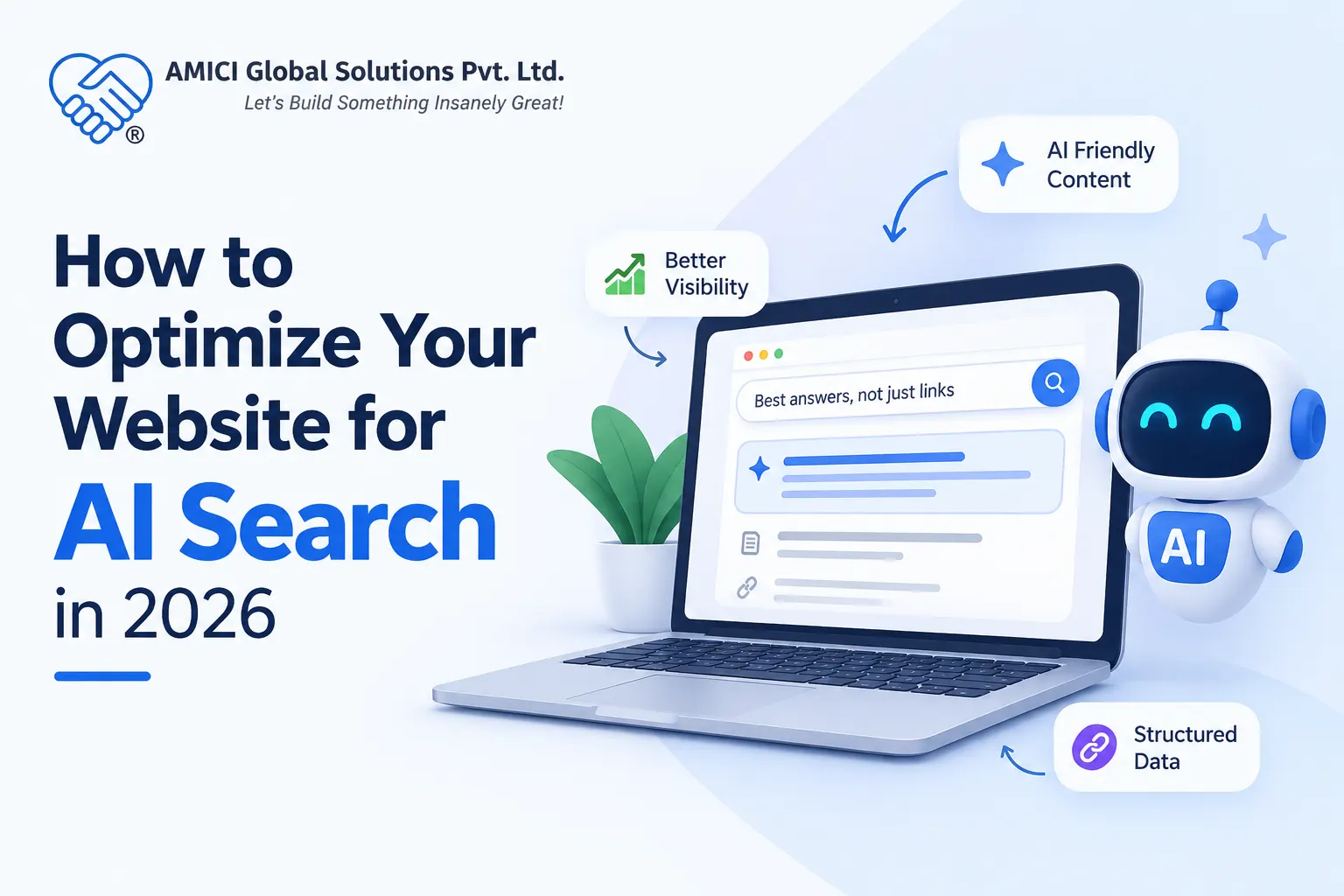
Introduction: Search Has Changed, and Your Content Must Change With It
Think about the last time you had a question. Maybe you asked how to start a career in marketing, which course to join after graduation, or how to fix a website that does not rank. Chances are you did not scroll through ten blue links. You read a short, direct answer at the top of the page, or you asked an AI assistant and got a complete explanation in seconds.
That shift is the biggest change to online visibility in a decade. Search is no longer only about ranking a page. It is about being chosen, quoted and cited inside the answer itself.
If you are a student learning digital marketing, a freelancer building a portfolio, or a business owner trying to grow online, this guide is for you. You will learn:
-
How AI search engines decide which content to cite
-
What AEO, GEO and E-E-A-T mean in plain language
-
A 12-step writing framework you can use on your very next blog post
-
How to structure headings, paragraphs, lists and FAQs so machines can extract them
-
How to measure whether your content is being cited
At AMICI Global Solutions, we work with businesses and students across Dwarka and Delhi NCR every day. The framework below comes from practical content, SEO and training work, not from theory.
Quick Answer: How Do You Write Content That AI Search Engines Cite?
To write content that AI search engines cite, answer the question in the first 40 to 60 words, support it with specific facts, structure the page with clear headings, show real experience and expertise, and keep it fresh and technically accessible. AI systems prefer pages that are accurate, easy to extract, clearly authored and genuinely helpful to a real person.
That single paragraph is a good example of what AI engines like: a direct answer first, details after.
What Are AI Search Engines, and How Do They Choose Sources?
How AI-Powered Search Works in Simple Words
An AI search engine reads a question, understands the intent behind it, collects relevant information from many pages and then writes a combined answer. Along the way it shows a few sources, usually as links or small citations. Those citations are the new "position one."
You will see this behaviour in AI Overviews on search result pages, in chat-style assistants and in answer boxes that summarise a topic.
Why Some Pages Get Cited and Others Do Not
AI systems look for passages they can trust and reuse. A page is more likely to be cited when it:
-
Directly answers a specific question
-
Uses clear language with no filler
-
Contains original insight, examples or data
-
Comes from an author or brand with visible expertise
-
Is organised so one section can stand alone as an answer
-
Loads quickly and is easy for crawlers to read
In other words, being cited is less about tricks and more about being the clearest, most reliable answer available.
Understanding the Terms: SEO vs AEO vs GEO
Students often get confused by new acronyms. Here is a simple breakdown.
SEO (Search Engine Optimization)
SEO is the practice of improving your website so it ranks in search results. It covers keywords, technical health, content quality and links. SEO is still the foundation of everything else.
AEO (Answer Engine Optimization)
AEO is about structuring content so it can be pulled directly into answers: featured snippets, voice responses, "People also ask" boxes and AI summaries. The goal is to be the answer, not just a result.
GEO (Generative Engine Optimization)
GEO focuses on being referenced by generative AI systems that write answers from multiple sources. It rewards authority, clarity, original information and a strong brand presence across the web.
A Simple Way to Remember It
-
SEO helps you get found
-
AEO helps you get answered
-
GEO helps you get cited
Do You Need All Three?
Yes. They overlap heavily. A page that follows strong SEO, adds answer-first formatting and demonstrates real authority usually performs well in all three areas.
Key Takeaway
Do not treat AEO and GEO as replacements for SEO. Treat them as the next layer on top of it.
Why Students and Beginners Should Learn This Now
If you are exploring a career in marketing, this skill is a major advantage. Here is why:
-
Employers want it. Agencies and brands are actively looking for writers who understand AI visibility.
-
It is still early. Fewer people know how to do it well, so you can stand out.
-
It strengthens your portfolio. A blog that earns citations is proof of skill.
-
It improves every other marketing skill. Strong content supports social media optimization, ads, email and web conversions.
If you want structured, hands-on learning, the digital marketing course at AMICI is designed for students and freelancers who want practical skills, not just theory.
E-E-A-T: The Trust Framework Behind Every Cited Page
E-E-A-T stands for Experience, Expertise, Authoritativeness and Trustworthiness. It is the lens quality evaluators use to judge whether content deserves to be shown, and AI systems lean on the same signals.
Experience
Show that you have actually done what you are writing about. Use first-hand examples, screenshots, results and lessons learned.
-
Write "In our campaigns for retail clients in Delhi, we found..." instead of generic statements
-
Share what failed, not only what worked
-
Add real process details
Expertise
Demonstrate knowledge through depth and accuracy.
-
Define terms clearly
-
Explain the "why," not just the "what"
-
Keep your information current
Authoritativeness
Build recognition as a go-to source.
-
Publish consistently on one topic cluster
-
Have a clear About page and author profile
-
Earn mentions and links naturally
Trustworthiness
Trust is the most important of the four.
-
Be transparent about who you are, where you are located and how to contact you
-
Avoid exaggerated promises
-
Keep a secure, fast and professional website
A business with a visible team, a real address and consistent reporting, like the approach described on the AMICI About Us page, sends exactly the trust signals AI systems prefer.
The 12-Step Framework to Write Content AI Engines Love to Cite
Step 1: Start With the Real Question Students and Searchers Ask
Great AI-friendly content begins with intent. Before writing, collect the actual questions your audience asks.
-
Use search suggestions and "People also ask" ideas
-
Read comments, class doubts and client enquiries
-
Group questions by stage: beginner, comparing, ready to act
For example, a student might ask:
-
What is AEO?
-
How is AI search different from Google search?
-
Do I need coding to write for AI search?
-
Which course should I take to learn this?
Write for those exact questions, in the same plain language.
Step 2: Choose Keywords That Match Intent, Not Just Volume
High-traffic keywords matter, but intent matters more. Choose a primary keyword, then support it with related terms and natural questions.
-
Primary keyword: the main phrase the page should rank for
-
Secondary keywords: supporting phrases such as content writing, AI search optimization, local SEO
-
Question keywords: "how to," "what is," "why," "best way to"
-
Entity keywords: brands, tools and concepts connected to the topic
Place the primary keyword in the title, the H1, the first 100 words, at least one subheading and the meta description. Never stuff keywords. If a sentence sounds awkward when you read it aloud, rewrite it.
If you need help building this research into a repeatable process, our content writing team does exactly this for clients.
Step 3: Give the Answer First (The Inverted Pyramid)
This is the single most powerful AEO habit.
Under every heading that asks a question, give a direct answer in 40 to 60 words, then expand with detail, examples and context.
Weak opening: "There are many factors, and every business is different, so it depends on several things..."
Strong opening: "Local SEO is the process of optimizing your online presence so nearby customers can find you in search results, maps and AI answers. It focuses on your Google Business Profile, local keywords, reviews and consistent business information."
The second version can be lifted into an AI answer almost word for word. That is the goal.
Step 4: Structure the Page With a Clean Heading Hierarchy
Headings are signposts for both readers and machines.
-
Use one H1 that contains your main keyword
-
Use H2s for major sections
-
Use H3s for sub-points inside each H2
-
Use H4 to H6 only when a topic genuinely needs deeper layers
-
Write headings that describe the content, ideally as questions or clear statements
A useful test: if someone read only your headings, would they understand the whole article?
Step 5: Write Self-Contained, Extractable Paragraphs
AI systems often pull a single passage, not the whole page. Each paragraph should make sense on its own.
-
Keep paragraphs to two to four sentences
-
Start with the main point
-
Avoid vague references such as "as mentioned above"
-
Name the subject clearly instead of relying on "it" or "this"
Think of every paragraph as a small, quotable unit.
Step 6: Use Lists, Tables and Steps for Scannability
Students skim before they read. AI systems also love structured formats because they are easy to extract.
Use bullet points for:
-
Features, benefits and tools
-
Checklists and requirements
-
Pros and cons
Use numbered lists for:
-
Processes and tutorials
-
Ranked recommendations
-
Sequences where order matters
Use comparison tables for side-by-side topics, such as SEO vs AEO vs GEO.
Step 7: Add Original Value That Cannot Be Copied
AI engines have access to millions of similar articles. To be cited, you must offer something they cannot get elsewhere.
Original value can include:
-
Your own case studies and campaign learnings
-
Process frameworks you created
-
Screenshots, charts or simple data from your work
-
Local insight, such as how businesses in Dwarka and Delhi NCR search differently
-
Honest opinions based on experience
If your article could be written by anyone without doing the work, it will probably not be cited.
Step 8: Show Your Authors and Your Credentials
Anonymous content carries less trust. Make it easy to see who is behind the page.
-
Add an author name, short bio and area of expertise
-
Link to a dedicated About page
-
Display certifications, years of experience and contact details
-
Keep your business name, address and phone number consistent everywhere
AMICI, for instance, highlights its ISO and CMMI certification, its Dwarka Mor location and its transparent reporting policy, all of which reinforce credibility.
Step 9: Cover the Whole Topic, Not Just One Keyword
AI systems reward topical depth. Instead of publishing one isolated post, build a content cluster.
-
A main "pillar" page on the broad topic
-
Supporting posts on narrower questions
-
Internal links connecting them naturally
For example, a pillar on digital marketing can connect to supporting content on SEO, social media optimization, web design and web development. Together they tell search systems that your site understands the full subject.
Step 10: Use Natural Internal Links Throughout the Article
Internal links help readers continue learning and help crawlers understand relationships between pages.
Best practices:
-
Link where the reader would naturally want more detail
-
Use descriptive anchor text, such as "local SEO services," not "click here"
-
Spread links across the article instead of placing them all in one spot
-
Link to your most important service and learning pages
-
Keep every link genuinely relevant
Step 11: Keep Content Fresh and Clearly Updated
Freshness is a quality signal, especially for fast-moving topics like AI search.
-
Show a visible "Updated" date
-
Review key facts every few months
-
Replace outdated tools, screenshots and advice
-
Add new sections when the topic evolves
Do not change the date without changing the content. Real updates build trust. Fake ones damage it.
Step 12: Finish With FAQs and a Clear Conclusion
FAQ sections are ideal for answer engines because each question and answer is a clean, self-contained pair.
-
Write questions the way people ask them
-
Keep answers short, complete and factual
-
Use FAQ structured data on the page where possible
-
End the article with a summary and a clear next step
Technical Foundations That Help AI Systems Read and Trust Your Page
Great writing fails if machines cannot access it. Check the following.
Make Your Website Fast, Mobile-First and Crawlable
-
Use a responsive layout that works smoothly on phones
-
Compress images and avoid heavy scripts
-
Make sure important content is in the page text, not hidden inside images
-
Do not block important pages from crawlers
A well-built site is the base of every ranking and citation. If your site feels slow or outdated, professional web development and web designing can fix the foundation before you invest in more content.
Add Structured Data (Schema Markup)
Schema is code that explains your content to machines. Useful types include:
-
Article or BlogPosting
-
FAQPage
-
Organization and LocalBusiness
-
Person (for author profiles)
-
Breadcrumb
Schema does not guarantee citations, but it removes confusion about what your page is.
Write Descriptive Title Tags, Meta Descriptions and URLs
-
Keep titles under about 60 characters
-
Write meta descriptions that promise a clear benefit
-
Use short, readable URLs with your main keyword
-
Use descriptive alt text for images
Keep a Clean Author and Organization Footprint
Use the same brand name, logo, address and contact details on your website, Google Business Profile and social profiles. Consistency helps systems recognise you as a real, established entity.
Local GEO: How to Get Cited for "Near Me" and City-Based Searches
Many AI answers are location-aware. When someone asks for the best service "near me," the engine looks for businesses and content tied to a clear place.
Optimize for Your City and Neighbourhood
If you serve a specific area, say so clearly and naturally. For example, a digital marketing company in Delhi should mention the areas it serves, the industries it works with and the problems local customers face.
-
Mention your city, sector or neighbourhood in headings and body text where it fits naturally
-
Add a Google Maps embed and clear address
-
Create location-relevant examples
-
Write about local customer behaviour
Strengthen Your Google Business Profile
-
Choose the correct primary category
-
Add services, photos and business hours
-
Collect genuine reviews and respond to them
-
Post regular updates
This is a core part of local SEO, and it directly influences whether your business appears in map results and AI-generated local recommendations.
Create Content for Local Questions
Examples:
-
"How much does SEO cost for a small business in Delhi?"
-
"Which digital marketing course is good for students in West Delhi?"
-
"How can a coaching institute get more enquiries online?"
These questions are specific, local and highly likely to appear in AI summaries.
Common Mistakes That Stop Content From Being Cited
Avoid these frequent errors:
-
Writing for algorithms instead of people. Robotic text rarely earns trust.
-
Burying the answer. Long introductions push the useful part too far down.
-
Publishing thin or generic content. If it adds nothing new, there is no reason to cite it.
-
Ignoring structure. Walls of text are hard to extract.
-
Using unverified claims. Accuracy matters more than impressive-sounding statements.
-
Keyword stuffing. It hurts readability and credibility.
-
Leaving content outdated. Stale advice loses visibility.
-
No author, no contact, no proof. Trust signals are missing.
-
Weak internal linking. Pages become isolated instead of forming a strong topic cluster.
How to Use AI Tools Responsibly When Writing
AI writing tools can help with research, outlines and editing, but they should never replace human judgement.
-
Use AI to brainstorm questions and structure ideas
-
Add your own examples, opinions and results
-
Fact-check every claim before publishing
-
Edit for tone so the article sounds like a real person wrote it
-
Never publish raw, unedited AI output
Content that is purely machine-generated tends to sound the same as everything else, which is exactly why it is not worth citing.
How to Measure Whether AI Search Engines Are Citing You
Tracking AI visibility is still developing, but you can build a practical routine.
Manual Checks
-
Search your target questions regularly and note whether your page appears in AI summaries
-
Ask AI assistants your target questions and see which sources they mention
-
Record results monthly in a simple spreadsheet
Analytics Signals
-
Growth in impressions for question-style queries
-
Increase in branded searches (people searching your name)
-
Referral traffic from AI-related sources
-
Higher engagement on pages with answer-first formatting
Business Outcomes
Citations only matter if they lead to results. Track enquiries, calls, WhatsApp chats, course sign-ups and form submissions. Clear monthly reporting, which is part of the AMICI approach, keeps the focus on leads and ROI instead of vanity metrics.
A Student-Friendly 30-Day Action Plan
If you are just starting, follow this simple roadmap.
Week 1: Learn and Plan
-
Understand SEO, AEO, GEO and E-E-A-T
-
Pick one topic you genuinely know
-
Collect 20 real questions about it
Week 2: Write Your First Answer-First Article
-
Create an outline with H1 to H3 headings
-
Write direct answers under every question heading
-
Add one original example or mini case study
Week 3: Optimize and Publish
-
Add internal links, schema, meta tags and image alt text
-
Add an FAQ section
-
Publish and share the article on social platforms
Week 4: Review and Improve
-
Check how the page is performing
-
Improve weak sections
-
Plan two supporting articles to build a content cluster
Want guided practice with feedback? The digital marketing course gives you real projects to build skills faster. You can also explore more learning articles on the AMICI blog.
Where Professional Help Makes Sense
Some businesses prefer to hand this work to specialists. If you need a complete strategy, a professional digital marketing company in Delhi can combine content, technical SEO, social media and website improvements into one plan. AMICI offers SEO, social media optimization, content writing, web design and web development under one roof, so you do not have to manage separate vendors. If you have questions, you can contact the team for a free consultation.
Conclusion: Be the Answer, Not Just Another Result
AI search has changed how people find information, but the core principle has not changed: the best, clearest and most trustworthy answer wins. To write content that AI search engines love to cite, answer questions directly, structure your page with clean headings, show genuine experience and expertise, add original value, keep everything updated and make your site technically easy to read.
Start small. Pick one topic, write one excellent answer-first article, and improve it every month. Over time, your content will build the authority that earns citations, traffic and trust.
Ready to grow your online visibility? Explore AMICI's digital marketing services, learn the skills yourself through the digital marketing course, or talk to our team today.
Frequently Asked Questions
Q. What type of content do AI search engines cite the most?
AI search engines most often cite content that gives a clear, direct answer, is well structured with headings and lists, shows real expertise and is regularly updated. Pages with original examples, named authors and strong topical coverage are more likely to be selected than generic, thin articles.
Q. Is AEO or GEO replacing traditional SEO?
No. AEO and GEO build on traditional SEO rather than replace it. You still need crawlable pages, relevant keywords, quality content and good user experience. AEO and GEO add answer-first formatting, stronger authority signals and clearer structure so AI systems can extract and cite your content.
Q. How long should a blog post be to get cited by AI?
There is no fixed length. What matters is completeness and clarity. For competitive topics, long-form articles of 2,000 to 3,500 words often work well because they cover the subject in depth, but every section should still contain short, direct, self-contained answers.
Q. Can beginners and students learn to write for AI search?
Yes. The fundamentals are simple: understand your reader's question, answer it clearly, structure your content well and show real knowledge. With practice and guidance, such as a hands-on digital marketing course, beginners can learn these skills in a few weeks.
Q. How can a local business in Delhi get cited in AI answers?
A local business should optimize its Google Business Profile, keep its name, address and phone details consistent, collect genuine reviews and publish helpful content around local questions. Working with an experienced digital marketing company in Delhi can speed this up through combined SEO, content and website improvements.