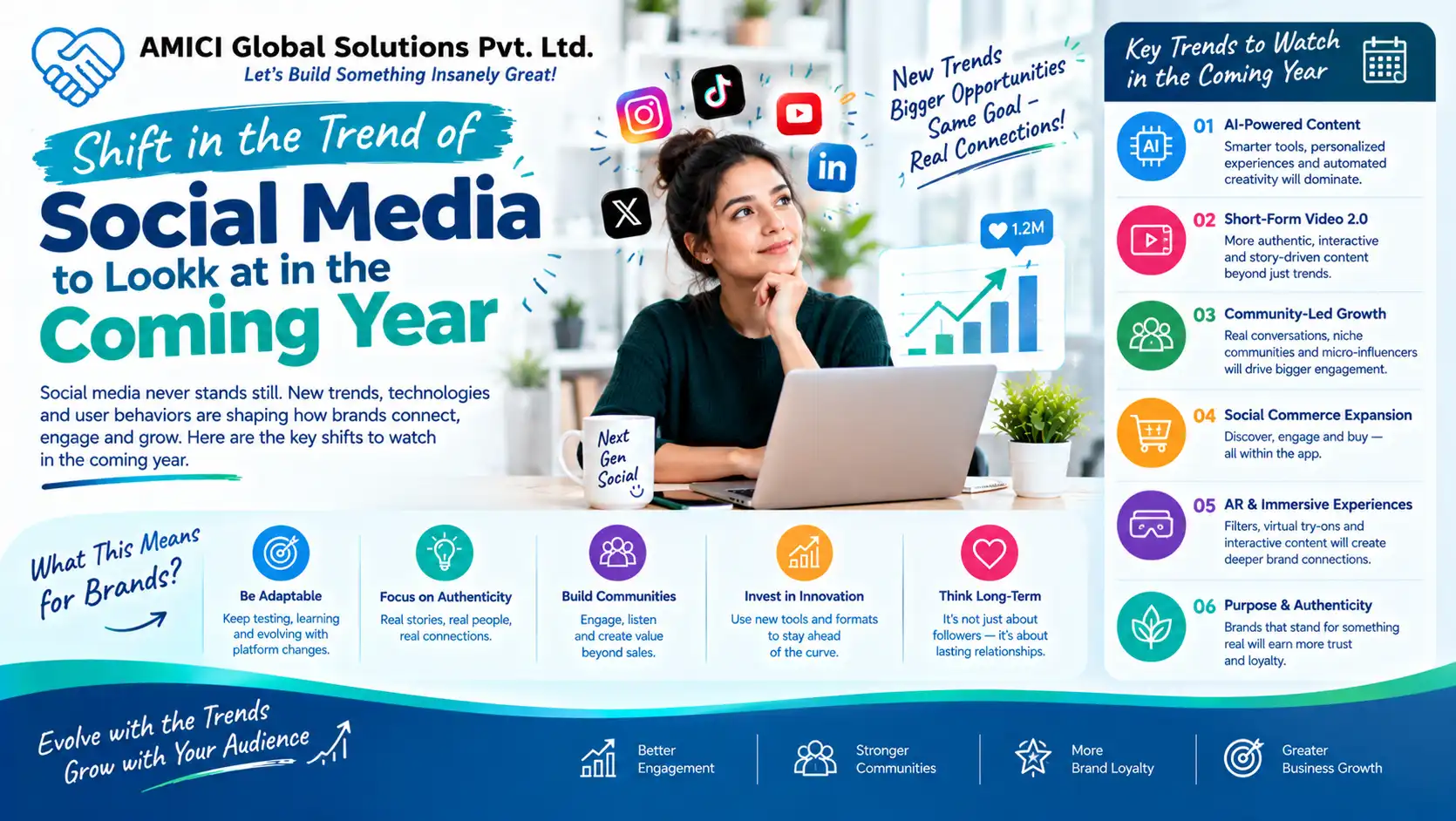
Social media is no longer a place where brands simply post and wait for likes. Platforms now behave like search engines, shopping malls, entertainment channels and customer support desks all at once. Algorithms reward different behaviour than they did before, audiences scroll with sharper filters, and trust has become the most valuable currency a brand can earn.
If you manage a business page, run campaigns for clients or work as a content creator, understanding the shift in the trend of social media is the difference between steady growth and wasted effort. This guide explains the major changes taking shape, why they matter, and how you can adapt your social media strategy with confidence. If you want expert help turning these ideas into results, our social media optimization services are built for exactly this.
Why Social Media Trends Are Changing So Fast
Three forces are driving the current shift. First, artificial intelligence now sits inside nearly every platform, shaping what people see, how content is made and how ads are targeted. Second, user expectations have changed. People want honest, useful and entertaining content, and they quickly ignore anything that feels like a pushy sales pitch. Third, privacy rules and platform policy changes have reduced how much data marketers can track, which pushes brands toward first-party relationships with their audience.
Together, these forces mean that old habits such as posting at random, chasing follower counts and copying competitors no longer work. A modern social media marketing strategy needs clear goals, original content and a deep understanding of audience intent.
Short-Form Video Becomes the Default Language of Social Media
Short-form video continues to dominate Instagram Reels, YouTube Shorts, Facebook Reels and TikTok-style feeds. What is changing is not the format itself but the expectations around it. Audiences have grown tired of overproduced clips and now respond to videos that feel real, quick and valuable within the first few seconds.
What Works in Short-Form Video Now
Strong hooks, clear captions, natural voiceovers and a single useful idea per clip perform best. Educational snippets, behind-the-scenes moments, customer stories and quick product demonstrations earn more saves and shares than polished advertisements. Because many people watch with the sound off, on-screen text and subtitles are now essential rather than optional.
Long-Form Video Is Making a Comeback
Interestingly, longer videos and live sessions are growing alongside short clips. Viewers use short videos for discovery and then move to longer content when they want depth. Brands that pair a quick teaser with a detailed tutorial, webinar or live question session build stronger relationships than those that rely on one format alone.
Social Media Is Turning Into a Search Engine
One of the most important shifts is that people, especially younger users, now search directly on social platforms. They look for restaurant ideas, product reviews, study tips, travel plans and local services on Instagram, YouTube and similar apps instead of typing a query into a traditional search engine first.
What Social Search Optimization Means
Social search optimization means writing keyword-rich captions, using descriptive on-screen text, adding relevant hashtags in moderation, naming files and profiles clearly and speaking your keywords aloud in videos. Platforms read all of these signals to decide what to show for a search. A well-optimized profile with a clear bio, consistent niche and strong location details helps local customers find you faster.
Connecting Social Search With Website Search
Social visibility and website visibility now support each other. When a post answers a question well, people often follow the trail to your website for more detail. That is why a strong search engine optimization strategy and an active social presence should be planned together rather than treated as separate jobs.
Artificial Intelligence Is Reshaping Content Creation and Strategy
AI tools now help with caption drafts, image editing, video clipping, audience analysis, scheduling and performance reporting. This saves time and lowers production costs, especially for small businesses. However, the same tools have flooded feeds with generic content, which makes originality more valuable than ever.
Using AI Without Losing Your Brand Voice
The smartest approach is to let AI handle repetitive work while humans provide insight, humour, local knowledge and emotion. Review every draft for accuracy, tone and relevance. Add real examples from your own business, because experience-based content is what audiences and algorithms increasingly trust.
AI-Driven Personalization and Recommendations
Platform algorithms now study viewing time, saves, replies and shares to predict what each person wants next. Content that holds attention and sparks genuine interaction is pushed further. Content that gets a quick like but no meaningful response fades quickly. This is why engagement quality matters more than raw reach.
Authenticity and Trust Beat Perfection
Audiences are becoming more sceptical of staged visuals and exaggerated claims. They prefer brands that show real people, admit mistakes, answer questions openly and share honest results. Transparency has become a growth strategy.
Building Trust Through Consistent Content
Trust grows when your content is consistent in tone, accurate in its claims and helpful in its purpose. Share case studies, customer feedback, process explanations and expert opinions. Clear, well-written posts and articles supported by professional content writing help establish authority and make your message easier to believe.
The Role of User-Generated Content
Content created by customers carries more credibility than brand-made advertising. Reviews, unboxing clips, testimonials and tagged photos act as social proof. Encourage customers to share their experiences, ask permission before reposting and always give credit.
Community Building Replaces Follower Chasing
A large audience that never interacts is far less valuable than a small group that talks, shares and buys. Brands are shifting from broadcasting messages to building communities where people feel heard and connected.
Private and Semi-Private Spaces
Group chats, broadcast channels, close friends lists, membership groups and messaging communities are growing because people want more personal conversations. Messaging platforms are also becoming powerful channels for customer support, updates and direct offers, particularly in markets where mobile chat is part of everyday life.
How to Encourage Meaningful Conversation
Ask thoughtful questions, respond to comments promptly, host live question sessions, run polls and highlight community members. Treat every comment as the start of a relationship rather than a metric to count.
Social Commerce Is Shortening the Path to Purchase
Shopping features inside social apps allow people to discover, compare and buy without leaving the platform. Product tags, in-app stores, live shopping events and creator recommendations are turning social feeds into storefronts.
Making Social Shopping Work for Your Business
Clear product photos, honest descriptions, simple pricing, fast replies and smooth checkout are the foundations. Even when sales happen inside an app, your own website remains the home of your brand, so keep it fast, mobile-friendly and trustworthy. A professionally built website from a team that offers web design and web development helps visitors who arrive from social posts convert into customers.
Creator and Influencer Marketing Grows More Strategic
Influencer marketing is moving away from one-time paid posts toward long-term partnerships with creators who genuinely fit a brand. Audiences can tell when a recommendation is sincere and when it is only a paid mention.
Micro and Niche Creators Gain Importance
Smaller creators with focused audiences often deliver higher engagement and stronger trust than celebrity accounts. For local and mid-sized businesses, niche creators offer affordable reach into exactly the right community.
Employee and Founder Advocacy
People trust people more than logos. Founders, team members and subject experts sharing insights on their own profiles, especially on professional networks, can humanize a company and attract better leads and talent.
Professional Networks Gain Ground for Business Growth
Professional platforms are no longer used only for job hunting. Thought leadership posts, short videos, document carousels, newsletters and expert commentary now drive business enquiries, partnerships and hiring. Companies that publish practical knowledge consistently build credibility with decision makers.
Data, Privacy and Social Listening Guide Smarter Decisions
With tighter privacy controls, marketers are relying more on first-party data such as email lists, customer feedback, website behaviour and direct messages. Social listening, which means tracking conversations about your brand, competitors and industry, helps you understand what people actually want and what frustrates them.
Metrics That Matter More Now
Instead of focusing only on follower growth and likes, look at saves, shares, comments, watch time, profile visits, link clicks, enquiries and sales. These signals show real interest and connect social media work to business outcomes. A broader digital marketing plan ties these numbers together so you can see how each channel supports the others.
Accessibility and Regional Language Content Expand Reach
Captions, alternative text, readable fonts, clear audio and inclusive visuals make content usable for more people. At the same time, content in regional and local languages is growing quickly, because audiences feel closer to brands that speak the way they do. For businesses serving local markets, mixing simple English with Hindi or other regional language content can improve connection and engagement.
Local Social Media Marketing Gains Strength
Many people now use social platforms to find nearby shops, clinics, coaching centres, restaurants and service providers. Location tags, local hashtags, community groups, customer reviews and consistent business details help local brands appear in front of nearby buyers. Local businesses that combine social activity with accurate business listings and a helpful website see stronger results.
How to Adapt Your Social Media Strategy to These Shifts
Start With Clear Goals and Audience Understanding
Decide whether your priority is awareness, lead generation, sales, community growth or customer support. Then study your audience: their questions, habits, preferred platforms and language. Strategy built on real insight outperforms guesswork every time.
Build a Flexible Content Plan
Mix educational, entertaining, inspirational and promotional content. Repurpose one strong idea into a short video, a carousel, a written post and a live discussion. Leave room for timely topics so your brand can react to what people are talking about.
Test, Measure and Improve
Review performance regularly. Keep what earns attention and action, and drop what does not. Small, steady improvements compound into major growth over time.
Invest in Skills and Support
Social media changes quickly, so learning never stops. Individuals who want to build a career in this field can explore a structured digital marketing course, while businesses that prefer expert execution can read more about the team on the about us page or browse practical guides on the AMICI blog.
Common Mistakes to Avoid
Many brands still post without a plan, buy followers instead of building real audiences, ignore comments and messages, copy trends that do not fit their identity or measure success only through vanity metrics. Others neglect their website, which is where interested visitors go to learn more and take action. Avoiding these mistakes already puts you ahead of most competitors.
Final Thoughts
The shift in social media is a shift toward value, trust and relationships. Short videos, social search, AI tools, community spaces, social commerce and creator partnerships are all different expressions of the same idea: people respond to brands that help them, respect them and speak to them honestly. Businesses that adapt early, stay consistent and measure what matters will earn attention that lasts.
Ready to build a social media presence that actually brings customers? Talk to the AMICI Global Solutions team about a custom plan for your brand. Contact us today for a free consultation.
Frequently Asked Questions
Q. What are the biggest social media trends businesses should watch?
The biggest shifts include the dominance of short-form video, the rise of social platforms as search engines, wider use of artificial intelligence, growth of social commerce, community-led marketing, creator partnerships and a stronger demand for authentic content.
Q. Is short-form video still worth investing in?
Yes. Short videos remain one of the best formats for discovery and reach. The key is to keep them useful, honest and well captioned, and to pair them with longer content when you want to build deeper trust.
Q. How is social media replacing traditional search?
Many users now type questions directly into social apps to find reviews, ideas, tutorials and local services. Platforms rank results using captions, spoken words, on-screen text, engagement and relevance, so optimizing your content for social search helps people find you.
Q. Can small businesses use artificial intelligence for social media?
Absolutely. AI tools can help with idea generation, drafting, editing, scheduling and reporting. Small businesses should still add personal insight and review everything before posting so the brand voice stays genuine.
Q. Which social media metrics matter the most now?
Saves, shares, comments, watch time, profile visits, link clicks, enquiries and sales matter more than follower count or likes alone, because they show real interest and business impact.
Q. How do I choose the right platform for my business?
Start with your audience. Visual and lifestyle brands often do well on image and video platforms, professional services benefit from business networks, and local businesses gain from community groups and messaging apps. Test a few platforms, then focus where engagement and leads are strongest.
Q. Do micro-influencers work better than famous influencers?
For many businesses, yes. Micro and niche creators usually have closer relationships with their followers, which leads to higher trust and better engagement at a lower cost.
Q. How does social media support SEO?
Social media does not directly replace search ranking factors, but it increases brand visibility, drives traffic to your website, spreads your content and builds brand searches. Combined with strong on-page work and quality content, it supports overall online growth.
Q. How often should a brand post on social media?
Consistency matters more than volume. Choose a schedule you can maintain with quality, and adjust based on how your audience responds.
Q. How long does it take to see results from social media marketing?
Engagement can improve within weeks, while steady growth in leads and sales usually builds over several months of consistent, well-planned activity. Paid promotion can speed up early results.
Q. Should I hire an agency or manage social media myself?
If you have the time and skills, managing it yourself can work for a small brand. An experienced agency saves time, brings tested strategy and handles content, optimization and reporting, which lets you focus on running your business.